- Opinion | EVs Are Arriving in Hong Kong; But Our Roads Still Waste Energy
- OPINION
- 2026-02-07 20:21
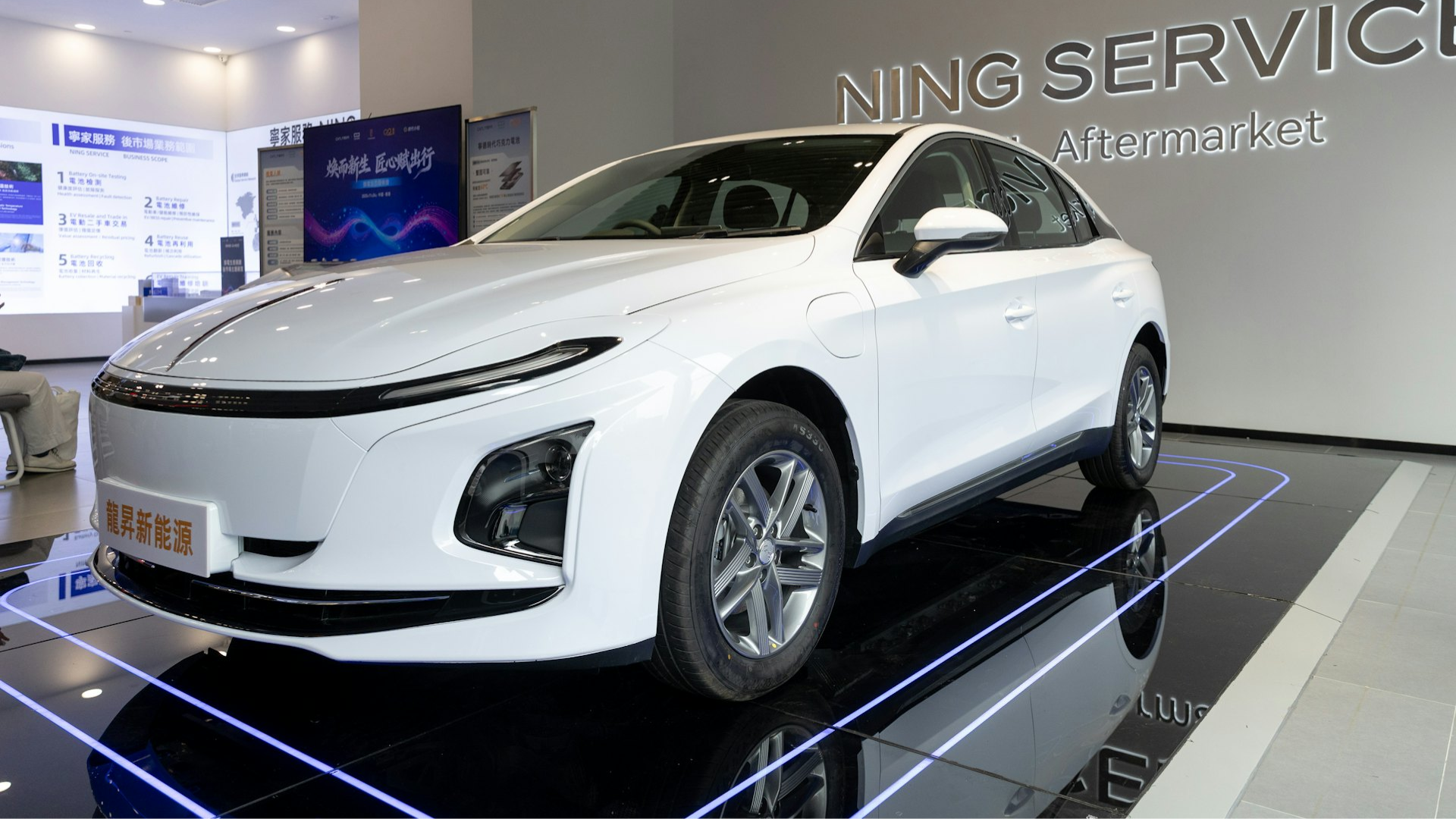
Hong Kong’s electric‑vehicle story is increasingly taking shape as a real market rather than a distant policy aspiration. The arrival of the first right‑hand‑drive Hongqi battery‑swap electric taxi captures that shift clearly. This is far more than the introduction of a new model. It represents the entry of a Chinese national automotive brand, rooted in Jilin, into one of the world’s most demanding and internationally exposed right‑hand‑drive urban environments; and it does so through one of the city’s most visible and high‑utilization vehicle fleets. It is a moment Hong Kong can take genuine pride in.
Many Hong Kong people, like us, feel a particular respect for the Hongqi marque, whose design and history evoke national pride. Seeing it operate as an everyday taxi reinforces the sense that a “national car” can stand confidently on global streets. That symbolism matters, because confidence and identity help markets move. But symbolism alone does not deliver energy efficiency.
If Hong Kong’s EV transition is to produce real, measurable gains, it must confront an uncomfortable truth: electrifying vehicles is only half the transition. The other half lies in the system those vehicles operate within. Too often, road layouts, junction design, signal timing, kerbside management, and network operations still force unnecessary stopping, idling, circling, and stop–start driving. The EV market can look successful while the transport‑energy outcome remains mediocre.
A recent paper of the author published in Energies journal reinforces this point by comparing road‑transport energy‑efficiency approaches in Hong Kong, Australia, and the United Kingdom. The study reminds us that road transport remains the dominant consumer of transport energy globally and a major source of greenhouse‑gas emissions. Its central argument is not simply that cleaner vehicles are needed, but that planning, design, operation, and maintenance of roads quietly and continuously shape energy use. Even in an EV‑heavy city, congestion still wastes energy, now electricity instead of petrol, and it creates secondary pressures through higher battery demand, more frequent charging or swapping, and greater strain on the power system.
Electric vehicles can recover some energy through regenerative braking, but regeneration does not erase losses caused by repeated acceleration, unstable speeds, poor circulation schemes, or queues generated by mismatched signal timing. For high‑uptime vehicles such as electric taxis, these inefficiencies are especially visible. If a battery‑swap taxi is intended to demonstrate the practicality and speed of electrification, the surrounding road system should not compel it to waste energy between swaps.
One of the more important insights from the academic review is that energy efficiency is often embedded indirectly in design standards through safety, capacity, or operational provisions, rather than treated as an explicit objective. Hong Kong’s Transport Planning and Design Manual (TPDM), for example, stands out for supporting operational efficiency through coordinated and adaptive signal control and public‑transport priority. These measures reduce idling and stop–start conditions in dense networks. The issue is not a lack of technical capability, but the absence of systematic energy accountability. Junctions are routinely assessed for level of service and capacity, yet the energy consequences of delay, speed variability, queue spillback, and repeated braking are rarely benchmarked or reported with the same seriousness.
This gap matters because much of the daily energy waste in urban transport does not come from exotic engineering problems, but from ordinary design and operational decisions. Signal coordination can function as an energy policy tool by smoothing traffic flow. Junction geometry and lane assignment influence braking and acceleration behaviour. Kerbside design affects whether vehicles circulate pointlessly or block running lanes. Public‑transport priority reduces total vehicle‑kilometres by shifting trips into high‑occupancy modes. Pavement condition and maintenance timing affect rolling resistance and disruption‑related congestion. All of these are elements of road design and management, even if they are not always labelled as such.
The EV debate in Hong Kong still tends to focus on visible infrastructure such as chargers, depots, grid upgrades, and now battery‑swapping systems. These are essential, but incomplete. Our research shows that energy performance is shaped across the entire life cycle of the road system and is strongly influenced by digital tools such as intelligent transport systems and AI‑enabled optimization. Improving operations can often deliver faster and cheaper energy savings than major physical reconstruction, while benefiting electric and non‑electric vehicles alike.
What is missing is an explicit requirement to treat roads as energy systems. An AI‑enabled benchmarking overlay, layered onto existing standards rather than replacing them, could translate familiar performance measures into comparable energy and carbon proxies. Corridors could be compared, energy hot spots identified, and upgrades prioritized based on real operational impact rather than visual appeal or theoretical capacity gains. Periodic “retro‑commissioning” of road networks—re‑optimizing signals, offsets, detection, speed management, and incident response—could restore real‑world performance in much the same way building retro‑commissioning restores energy efficiency to match design intent.
The arrival of the new electric taxi provides a timely test case. High‑utilization fleets make the benefits of good operations visible because their energy use is measurable, comparable, and sensitive to small changes in delay and speed stability. If national brands are to succeed globally, they need infrastructure that amplifies, rather than undermines, clean technology.
We may feel pride seeing the new EV taxi glide through Central in Hong Kong, but the city’s deeper prestige will come from something less photogenic: How little energy is wasted to move people and goods safely and reliably. Electrifying what already exists is not enough. To make the transition real, road design and traffic operations must be treated as core energy infrastructure, as consequential as charging networks and far more enduring. Electric vehicles can make the market look good; energy‑smart roads can make the transition meaningful.
Dr. Philip Wong
Deputy Director of STEAM Education and Research Centre, Lingnan University
Mr. Xiongyi Guo
Assistant Research Officer of Pan Sutong Shanghai-Hong Kong Economic Policy Research Institute, Lingnan University
The views do not necessarily reflect those of Orange News.
Cover photo: HK01
責編 | 李永康
編輯 | Lucy
編輯推薦
-
![]()
Opinion | Markets Move Fast, Build Strength Longer
Opinion | 2026-07-06 11:29 -
![]()
Opinion | Making the Northern Metropolis Work
Opinion | 2026-07-03 16:11 -
![]()
Opinion | The Significance of July 1, 2026: A Confluence of Commemorations and Strategic Renewal
Opinion | 2026-07-02 19:01 -
![]()
Opinion | Hong Kong Approaching Its “29+1”: Ready for the Next Leap
Opinion | 2026-07-02 11:17 -
![]()
Opinion | Keeping Abreast of AI Trends to Strengthen Public Awareness Against Scams
Opinion | 2026-06-29 15:13 -
![]()
Opinion | Closing the AI Education Divide, Not Just Teaching the Tools
Opinion | 2026-06-29 11:39





傳梁文鋒不滿會議外洩 叫停DeepSeek次輪融資

有片|神舟二十三乘組在軌滿60天 迎問天實驗艙發射發射4周年

甘肅渭源景區山洪已致10死23傷 事前曾發暴雨預警 救援仍在進行

美伊暫停空襲油價急回 布油曾挫逾7%跌穿90美元